
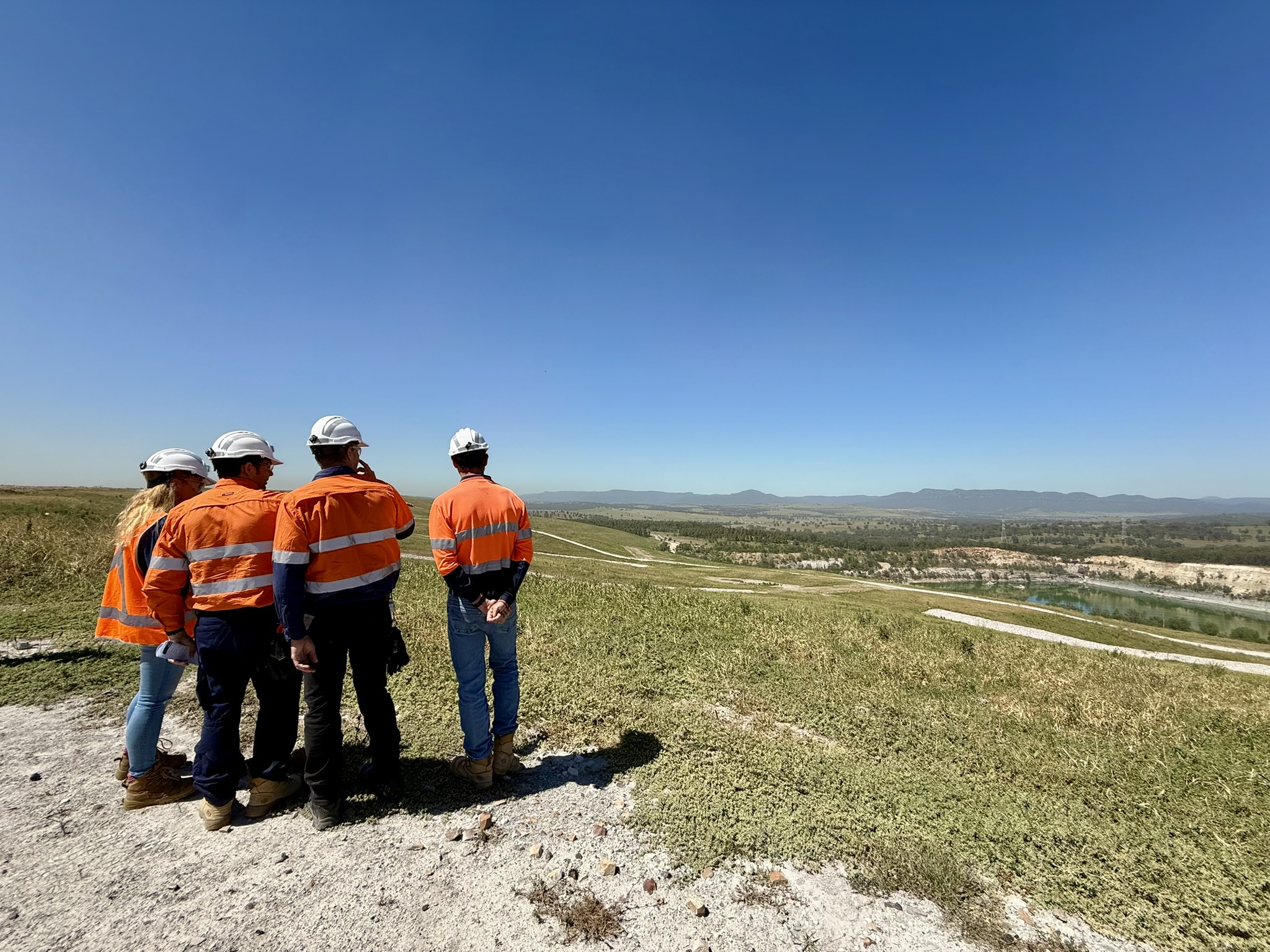
The Upper Hunter Mining Dialogue has released the 2025 Air Quality Update, the latest report in the air quality data analysis project for the region.
The Update is prepared by Zephyr Environmental, an independent air quality specialist, and provides analysis and reporting on key aspects of air quality across the Upper Hunter. It draws on data from 14 NSW Government air quality monitoring stations within the Upper Hunter Air Quality Monitoring Network (UHAQMN).
Concentrations of PM10 (coarse inhalable particles) and PM2.5 (fine inhalable particles) are analysed, as well as the relationship between rainfall, raw coal production, overburden removed and particulate matter concentrations. This data is compared to data from other NSW Government monitoring regions across NSW.
Overall, the 2025 findings show that changes in air quality in the Upper Hunter were generally consistent with changes observed across the rest of NSW, indicating that regional conditions remain the dominant influence on annual particulate matter concentrations.
Key findings from the 2025 Update are:
- PM10 levels in the Upper Hunter were generally consistent with patterns observed across the rest of NSW.
- Climatic conditions, including rainfall, are the primary driver of air quality in the Upper Hunter. While coal production and overburden removal play a role, their impact on PM10 levels is secondary to the dominant effect of rainfall.
- Overall, exceedance trends across the UHAQMN and the remainder of NSW were generally similar.
- Exceedance days in 2025 remained below the all-years average across all locations.
- UHAQMN large population stations recorded 7 exceedances in 2025, while smaller community stations recorded 12 exceedances.